Tracing Historical Milestones in Fraud Prevention for Digital Reward Distribution Networks
Written by Ellis Albrecht · Jul 30, 2026
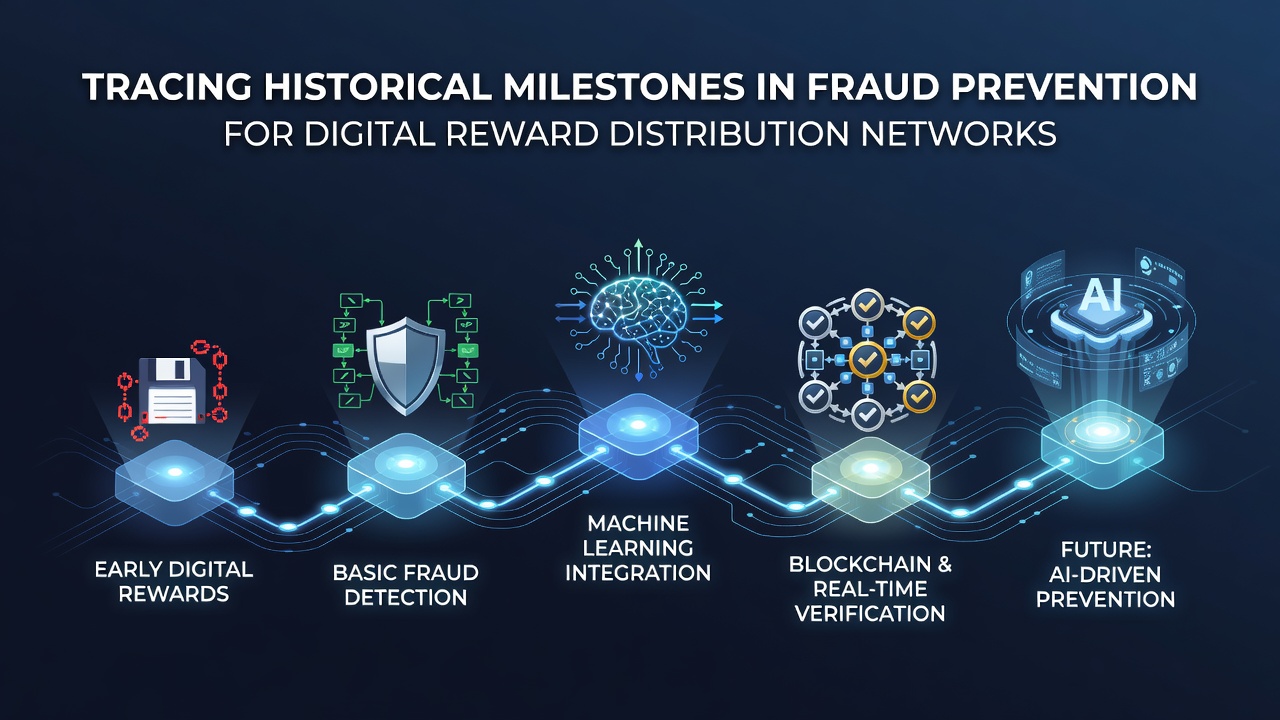
Tracing Historical Milestones in Fraud Prevention for Digital Reward Distribution Networks
Digital reward distribution networks emerged in the late 1990s as companies began shifting loyalty programs and promotional incentives online, and early systems relied on basic password protections along with manual verification processes that proved insufficient against coordinated attacks. Researchers at several universities documented the first large-scale incidents of reward farming in 1999 when automated scripts exploited simple entry forms to claim multiple incentives from nascent e-commerce platforms, prompting initial experiments with rate limiting that slowed but did not stop determined operators.
Early 2000s: CAPTCHA and Basic Authentication Layers
By 2003 several major reward platforms adopted CAPTCHA challenges after studies from academic labs showed that script-based fraud accounted for over 40 percent of illegitimate claims in certain networks, and this technology combined distorted text recognition with session tokens to verify human participation while still allowing legitimate users to complete entries without excessive friction. Data from industry reports around that period indicated a temporary drop in automated abuse, yet fraudsters quickly adapted through CAPTCHA farms located in regions with low labor costs, leading developers to integrate behavioral signals such as mouse movement patterns and keystroke timing into verification routines by 2007.
Mid-2010s: Machine Learning and Anomaly Detection
Between 2012 and 2015 machine learning models began replacing rule-based filters in reward distribution systems, with algorithms trained on historical transaction logs that flagged unusual patterns including rapid multi-account creation from single IP ranges or geographic inconsistencies in user activity. The Federal Trade Commission published guidance in 2014 outlining best practices for monitoring digital incentive programs, and networks that implemented gradient boosting classifiers reported measurable reductions in fraudulent redemptions according to aggregated statistics shared at trade conferences. At the same time device fingerprinting techniques gained traction because they combined browser attributes, hardware identifiers, and canvas rendering data to link seemingly separate accounts without requiring additional user input.
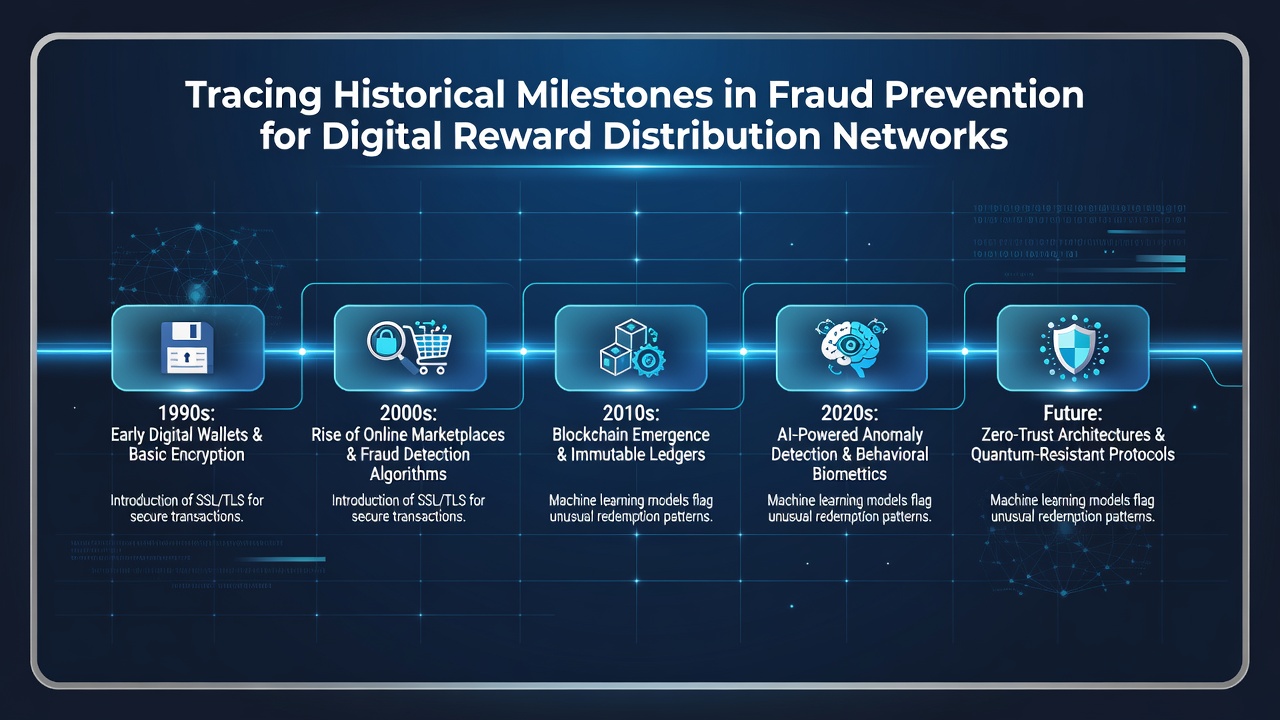
Late 2010s: Blockchain Integration and Decentralized Ledgers
Starting around 2017 several reward platforms experimented with blockchain-based ledgers to create immutable records of point issuance and redemption, and this approach allowed participants to verify transaction histories while making retroactive alterations more difficult for internal or external actors. A 2018 working paper from a European research consortium examined early implementations and noted that smart contracts could enforce eligibility rules automatically when combined with oracle feeds that supplied external data such as location or purchase confirmation. Although adoption remained limited to niche programs at first, the underlying principle of distributed verification influenced larger operators who began incorporating similar transparency features into centralized databases by 2020.
2020-2023: Biometric and Multi-Factor Advances
The shift to widespread remote participation during 2020 accelerated deployment of biometric checks including facial recognition and fingerprint matching within mobile reward applications, and regulatory bodies in Australia released updated consumer protection guidelines that encouraged these methods when paired with clear consent mechanisms. Networks reported that combining biometrics with one-time passcodes sent via SMS or authenticator apps reduced account takeover incidents by significant margins according to internal metrics shared through industry associations. At the same time privacy-preserving techniques such as federated learning allowed models to improve fraud detection across multiple platforms without centralizing sensitive user data, addressing concerns raised by data protection authorities in Canada and the European Union.
2024-2026: AI Refinements and Regulatory Alignment
Between 2024 and mid-2026 further refinements in generative AI detection tools helped identify synthetic media used to spoof biometric systems, and a July 2026 report from an international standards body highlighted collaborative frameworks that enabled real-time sharing of fraud signatures among reward network operators while maintaining compliance with varying regional privacy laws. These developments built on earlier foundations yet introduced adaptive thresholds that adjusted dynamically based on overall network risk levels rather than static rules, allowing legitimate high-volume users to continue participating while isolating coordinated campaigns more effectively than previous generations of filters.
Conclusion
Historical milestones in fraud prevention for digital reward distribution networks reveal a consistent pattern of innovation followed by adaptation, with each technological layer building upon prior defenses while regulatory guidance from multiple jurisdictions shaped implementation timelines. Observers note that continued collaboration between researchers, platform operators, and oversight agencies remains essential as new attack vectors emerge alongside advances in artificial intelligence and distributed ledger technologies.