The Interplay Between Notification Timing Algorithms and User Response Patterns in Worldwide Promotional Reward Ecosystems
Written by Morgan Jung · Jun 15, 2026
The Interplay Between Notification Timing Algorithms and User Response Patterns in Worldwide Promotional Reward Ecosystems
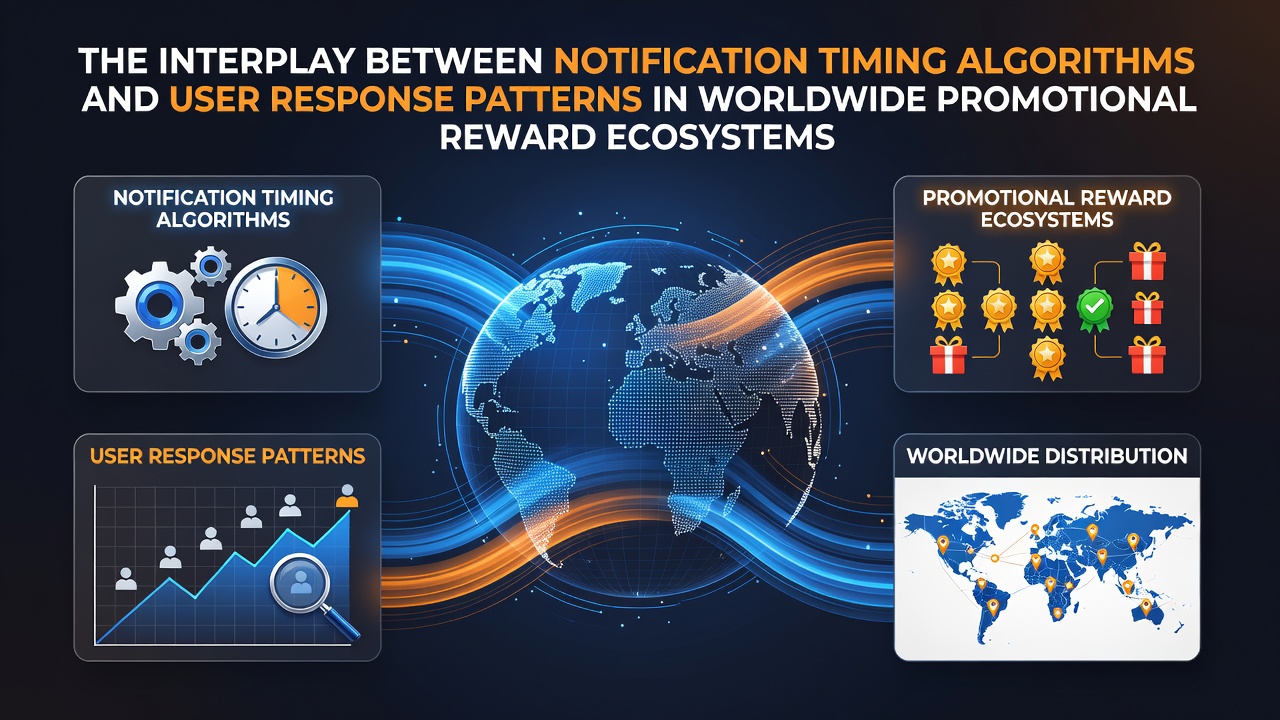
Notification timing algorithms have become central to how promotional reward platforms manage user engagement across different regions and time zones. These systems analyze user activity data, device usage patterns, and historical response rates to determine when messages about new prize opportunities should reach participants. Research from academic institutions shows that precise timing can shift entry completion rates by substantial margins in mobile-based reward programs.
Core Mechanisms in Algorithm Design
Algorithms process inputs such as login times, previous interaction windows, and regional peak activity periods to schedule notifications. In practice, a system might delay a message until a user’s typical evening window in their local time zone while accounting for weekend versus weekday differences. Data from industry reports indicates that platforms serving multiple continents often segment their user bases into clusters based on these behavioral signals rather than applying uniform schedules.
Machine learning models refine these decisions over time by tracking which notification windows produce the highest rates of subsequent actions like form submissions or app opens. Observers note that adjustments occur continuously as new response data flows back into the system, creating feedback loops that adapt to seasonal shifts or changes in user habits.
Observed Response Patterns Across Regions
Studies conducted by research teams in North America and Asia have documented distinct patterns tied to notification delivery times. Users in urban centers frequently show elevated response rates when messages arrive during commute periods, whereas participants in rural areas demonstrate stronger engagement during evening hours. These differences appear consistently in aggregated platform data from 2025 and into mid-2026.
European user cohorts, according to analyses shared by consumer protection agencies, tend to respond more readily to notifications sent mid-morning on weekdays. In contrast, patterns in South American markets often peak later in the day, influenced by local work schedules and cultural routines. Such variations require algorithms to maintain separate calibration models for each major market rather than relying on a single global template.
Impact of Time Zone Synchronization
Worldwide platforms face added complexity when aligning notification delivery with simultaneous global events, such as limited-time prize pools that launch at a fixed UTC moment. Algorithms must calculate the optimal local send time for each user to maximize the chance that the message arrives when the individual is most likely to act. Figures released in early 2026 by technology research groups reveal that synchronized campaigns achieve higher aggregate response consistency when timing models incorporate both individual habits and event-specific constraints.
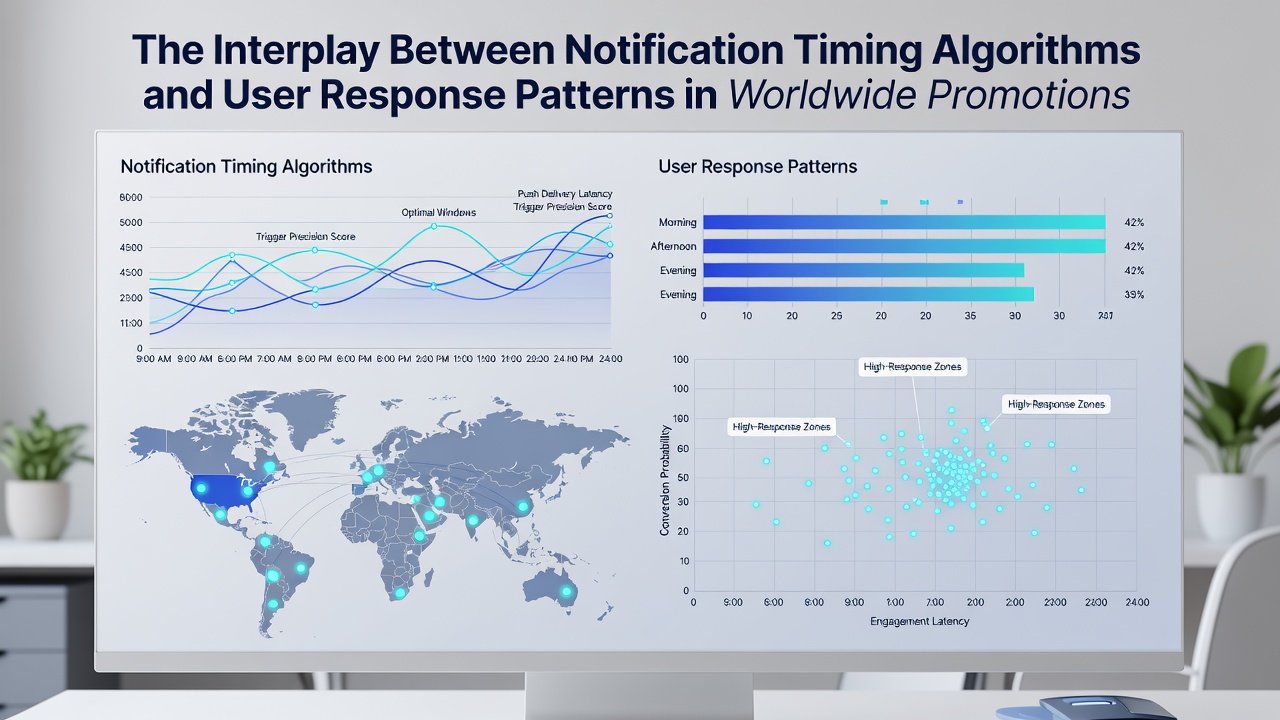
Platforms that ignore these calculations often record sharp drops in participation from users whose notifications land during sleep hours or work obligations. One documented case involved a multi-region campaign where failure to adjust for a major time zone boundary reduced entry volume by nearly a quarter in affected markets.
Data Sources Informing Algorithm Updates
Continuous data streams from app analytics, server logs, and A/B testing frameworks supply the raw material for algorithm refinement. Government agencies such as the U.S. Federal Trade Commission publish periodic guidance on transparent promotional practices that indirectly shapes how timing systems present offers. Meanwhile, reports from the Australian Competition and Consumer Commission highlight regional expectations around message frequency and relevance, prompting platforms to calibrate delivery windows accordingly.
Academic papers examining large-scale reward ecosystems further contribute insights into how notification cadence interacts with response decay curves. Researchers have tracked cohorts over multiple months and found that repeated exposure at poorly chosen times accelerates user disengagement, while well-timed messages sustain participation levels longer.
Adaptations Emerging in June 2026
By June 2026, several major platforms had implemented dynamic models that incorporate real-time signals such as device location changes or recent app session length. These updates allow notification timing to shift within a single day based on detected user movement across time zones. Industry analyses suggest such responsive systems produce more stable entry patterns than static scheduling approaches used in prior years.
Cross-border reward programs also began testing hybrid models that blend algorithmic predictions with limited manual overrides during high-stakes promotional windows. The goal remains consistent delivery that aligns with observed behavioral peaks rather than uniform broadcast schedules.
Conclusion
The relationship between notification timing algorithms and user response patterns continues to evolve as platforms gather more granular data from worldwide participants. Regional differences in engagement windows, combined with advancing machine learning techniques, drive ongoing refinements in how promotional reward ecosystems reach their audiences. Continued examination of these interactions provides clearer pictures of effective delivery strategies across diverse markets.