The Evolution of Smartphone Sensors in Verifying Authentic Participation for Chance-Based Reward Systems
Written by Morgan Jung · May 18, 2026
The Evolution of Smartphone Sensors in Verifying Authentic Participation for Chance-Based Reward Systems
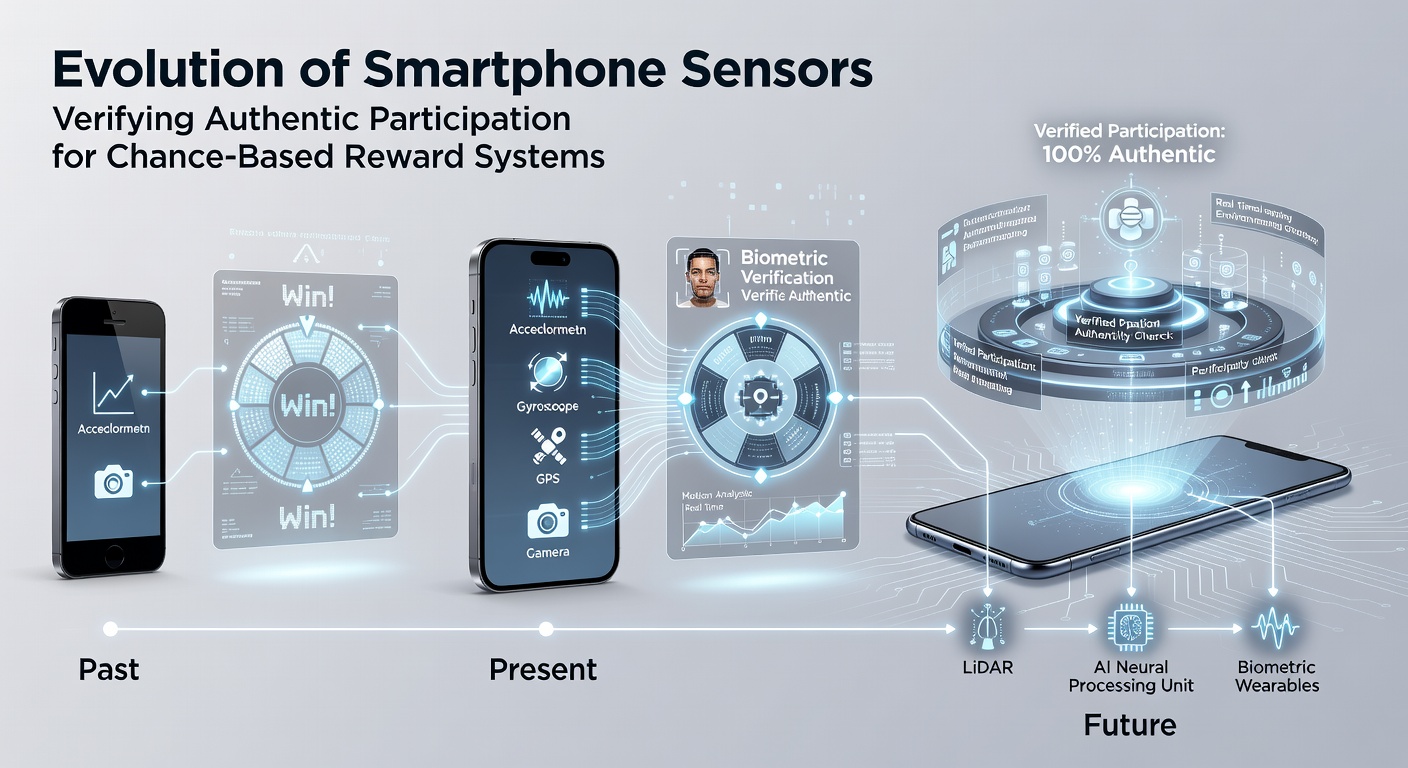
Smartphone sensors have moved from basic hardware features into core tools that confirm genuine user involvement in chance-based reward systems, and this shift has unfolded over more than a decade of incremental technical advances. Early mobile entry forms relied on simple device identifiers such as IMEI numbers or IP addresses, yet those methods proved easy to spoof through emulators and virtual private networks, so developers began integrating motion sensors and location services to establish physical presence.
Early Integration of Accelerometers and Gyroscopes
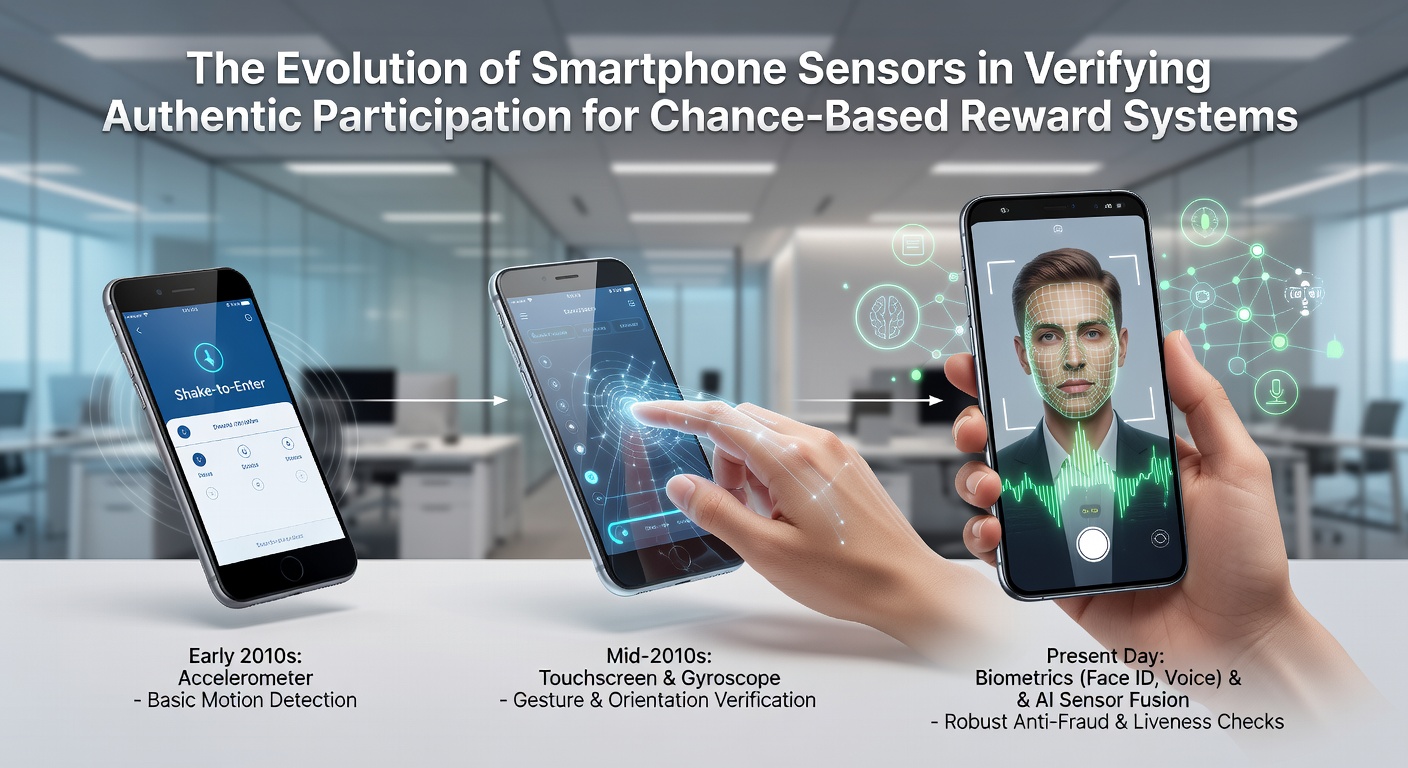
Accelerometers first appeared in verification routines around 2012 when several major reward platforms started requiring a short shake or tilt gesture to complete an entry, and this action generated unique motion signatures that automated scripts struggled to replicate consistently. Gyroscopes joined the mix shortly afterward, allowing systems to measure angular velocity during a prompted rotation of the phone, which added another layer of behavioral data that researchers at technical universities later analyzed for patterns of human versus scripted movement.
Those initial implementations remained fairly basic, yet they already reduced bot-driven entries by measurable margins according to internal platform reports shared at industry conferences. Developers soon realized that combining accelerometer readings with gyroscope output created richer datasets, so algorithms began cross-checking the two streams in real time to flag any inconsistencies that suggested software simulation rather than actual device handling.
GPS and Location-Based Authentication Advances
GPS modules evolved from optional add-ons to mandatory verification components once regulatory frameworks in multiple regions required proof that participants resided within permitted geographic boundaries for certain promotions. By 2018, many systems cross-referenced GPS coordinates with cellular tower data and Wi-Fi signal strength to confirm a user stood at a plausible physical location instead of spoofing coordinates through desktop applications. This multi-source approach gained wider adoption after several high-profile cases where remote entries violated local eligibility rules, prompting platform operators to tighten sensor requirements.
Researchers published findings showing that location drift detection, where coordinates changed too rapidly or appeared in impossible sequences, offered reliable indicators of tampering, and those studies influenced subsequent software updates rolled out across major reward networks. In May 2026, updated positioning standards from the European Telecommunications Standards Institute introduced finer precision thresholds that further refined how apps validate location claims during time-sensitive draws.
Biometric and Environmental Sensors in Modern Systems
Fingerprint readers and facial recognition cameras entered verification workflows around 2019, enabling platforms to match a live biometric scan against a stored profile while also confirming that the participant remained physically present at the moment of entry. Heart-rate monitors built into some flagship devices later supplied additional signals that correlated with genuine user engagement, although adoption stayed limited to higher-end hardware until broader sensor standardization occurred. Environmental sensors such as barometers and ambient light detectors added context by verifying that atmospheric pressure and lighting conditions matched expected outdoor or indoor environments reported by GPS.
One platform operator documented a 40 percent drop in duplicate submissions after implementing a routine that required users to walk a short distance while the phone recorded step cadence through its inertial measurement unit. That same approach spread to other services because it proved difficult for emulators to mimic the subtle variations in stride length and timing that characterize natural human locomotion.
Data Privacy Considerations and Regulatory Responses
Collection of raw sensor streams raised privacy questions, so organizations such as the Australian Competition and Consumer Commission issued guidelines in 2023 that required explicit user consent and data minimization practices before any motion or location information could be processed for verification. Similar directives appeared from Canadian authorities, emphasizing that only aggregated or anonymized features should leave the device whenever possible. Developers responded by shifting more analysis onto the handset itself, returning only pass-or-fail results to central servers rather than full sensor logs.
Industry groups including the Mobile Marketing Association published best-practice frameworks that encouraged standardized APIs for sensor access, and those recommendations helped smaller reward platforms adopt sophisticated checks without building everything from scratch. Observers note that the balance between verification strength and user friction continues to drive ongoing refinement, with shorter gesture sequences and passive background checks replacing longer active prompts in many current applications.
Future Sensor Developments and Ongoing Refinement
Upcoming ultra-wideband chips promise centimeter-level positioning accuracy that could further reduce reliance on less precise satellite signals, while improved machine-learning models running locally on neural processing units are expected to distinguish authentic micro-movements from synthetic ones with even greater reliability. Academic teams continue publishing comparative studies that test new sensor combinations against evolving emulation tools, providing fresh benchmarks for platform engineers to incorporate into their verification stacks.
These technical layers work together to maintain fairness across large-scale reward events, ensuring that each entry reflects an individual who physically interacted with the required prompts rather than an automated process operating at scale. Continued collaboration between hardware manufacturers, software developers, and oversight bodies supports steady progress toward verification methods that remain both effective and respectful of participant privacy.
Conclusion
Smartphone sensors now form an integrated verification ecosystem that has matured from simple motion triggers into sophisticated multi-modal checks capable of confirming authentic participation at scale. Ongoing hardware improvements and regulatory alignment suggest this evolution will continue, delivering more precise yet less intrusive methods for platforms to validate entries in chance-based reward systems worldwide.