Intersections of Behavioral Data and Eligibility Screening in Global Reward Allocation Systems
Written by Morgan Jung · Jun 4, 2026

Intersections of Behavioral Data and Eligibility Screening in Global Reward Allocation Systems
Behavioral data and eligibility screening converge in global reward allocation systems where operators track participation patterns to verify who qualifies for prizes across borders. These systems process information on entry frequency, device signatures, and geographic signals alongside standard checks for age, location restrictions, and prior wins, and they do so at scale in promotional campaigns that span multiple continents. Data flows from user interactions feed directly into automated filters that adjust access in real time.
Behavioral Data Sources in Reward Platforms
Platforms gather behavioral signals through entry timestamps, clickstream sequences, and referral chain lengths while participants engage with sweepstakes and giveaways. These metrics combine with account creation details to build profiles that flag unusual activity such as repeated submissions from the same IP cluster or synchronized entries across time zones. Research indicates that such aggregation occurs daily in systems handling millions of submissions, and operators integrate the resulting datasets with eligibility rules to prevent duplicate claims or restricted-region access.
Device fingerprinting adds another layer where accelerometer readings and browser configurations help distinguish genuine users from automated scripts. Studies from academic research groups have documented how these signals improve screening accuracy, and the process links directly to compliance requirements that differ by jurisdiction. In June 2026 several international frameworks are scheduled to update their guidelines on cross-border data handling, which will require reward platforms to recalibrate how behavioral logs interface with eligibility databases.
Eligibility Screening Mechanisms
Screening routines verify participant status by cross-referencing submitted information against regulatory lists and internal win histories. Location checks rely on IP geolocation supplemented by behavioral indicators such as typical login hours that align with declared time zones. Age verification often pulls from third-party databases while behavioral consistency checks confirm that entry patterns match expected human activity rather than scripted repetition.
Operators apply these layers sequentially so that behavioral anomalies trigger additional review before final eligibility confirmation. Evidence from industry reports shows that this sequential approach reduces invalid allocations without halting legitimate participation from regions with varying promotional rules. And the integration grows more complex when reward pools span multiple countries because each jurisdiction maintains distinct exclusion criteria that behavioral data must help enforce.
Where the Two Systems Overlap
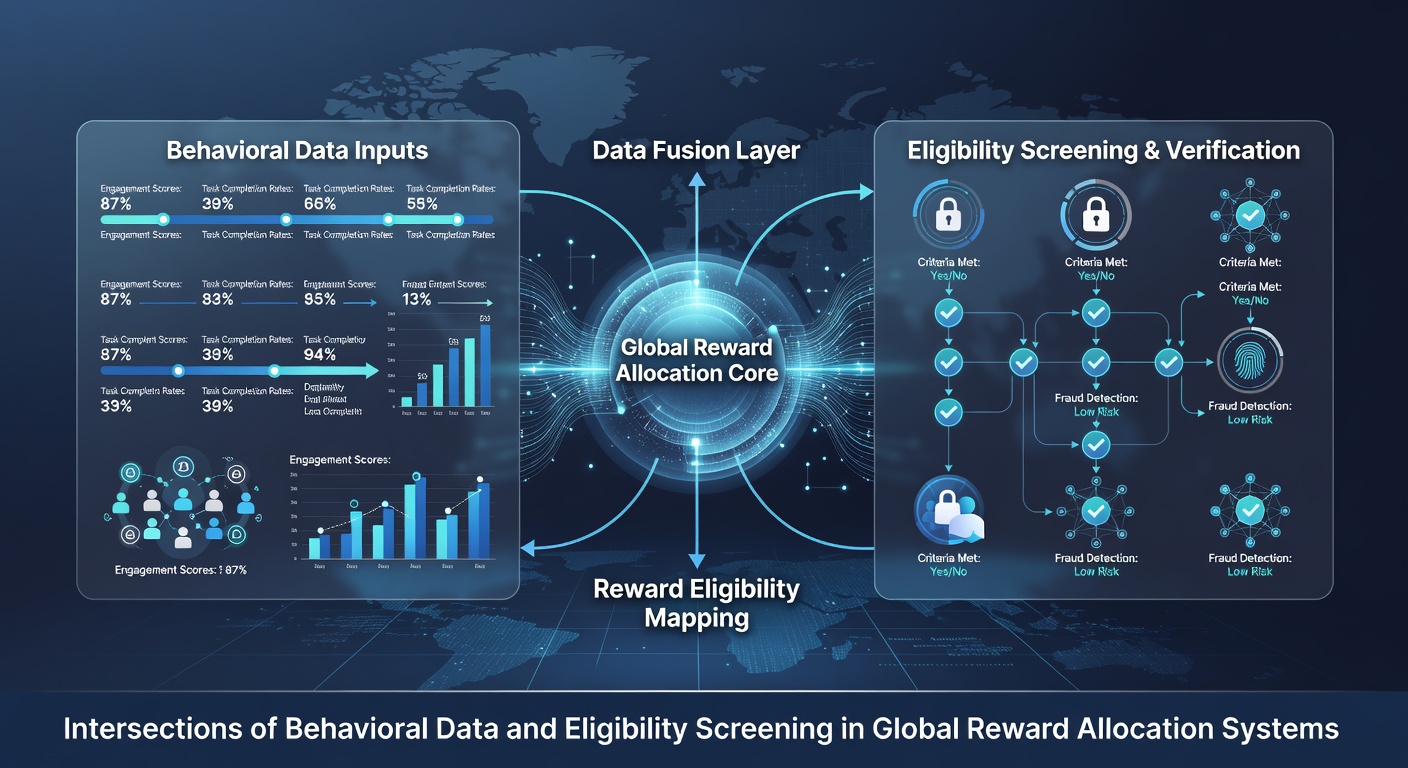
Behavioral data strengthens eligibility screening by supplying context that static records cannot provide. For instance, a participant who enters contests only during specific windows may trigger location re-verification if those windows conflict with stated residency. Platforms use machine learning models trained on historical entry datasets to predict compliance risk, and these models adjust screening thresholds dynamically as new behavioral patterns emerge.
One documented implementation involves linking referral network density to eligibility flags because dense referral clusters sometimes indicate coordinated activity that violates single-account rules. According to the Federal Trade Commission guidelines on consumer data practices, such linkages must remain proportionate to the risk of improper reward allocation. Observers note that similar requirements appear in Canadian privacy frameworks administered by the Office of the Privacy Commissioner, where behavioral profiling for eligibility purposes undergoes periodic audits.
Regulatory and Technical Considerations Across Regions
Global reward systems must reconcile differing data retention periods and consent standards when behavioral information crosses borders. European operators often apply stricter purpose limitation rules than counterparts in Asia-Pacific markets, which leads to segmented data pipelines that feed the same eligibility engine. Technical standards for data portability further influence how screening algorithms access historical behavioral records during verification.
Organizations such as the OECD have published analyses showing that harmonized data formats reduce friction in cross-border reward distribution, yet implementation varies because national laws continue to evolve. In practice this means platforms maintain separate behavioral datasets for different regulatory zones while applying unified eligibility logic at the point of reward allocation. The result is a hybrid architecture that processes signals differently depending on the participant's declared jurisdiction.
Conclusion
Behavioral data and eligibility screening continue to shape global reward allocation through layered verification that combines participation analytics with regulatory checks. As updates scheduled for June 2026 take effect, platforms will refine these intersections to maintain compliance across expanding geographic scopes. The technical and legal frameworks supporting this convergence determine how accurately reward systems distinguish eligible participants from those who fall outside permitted categories.