Interface Designs Shaping Completion Rates in Multi-Platform Reward Submissions
Written by Amir Walter · Jul 23, 2026
Interface Designs Shaping Completion Rates in Multi-Platform Reward Submissions
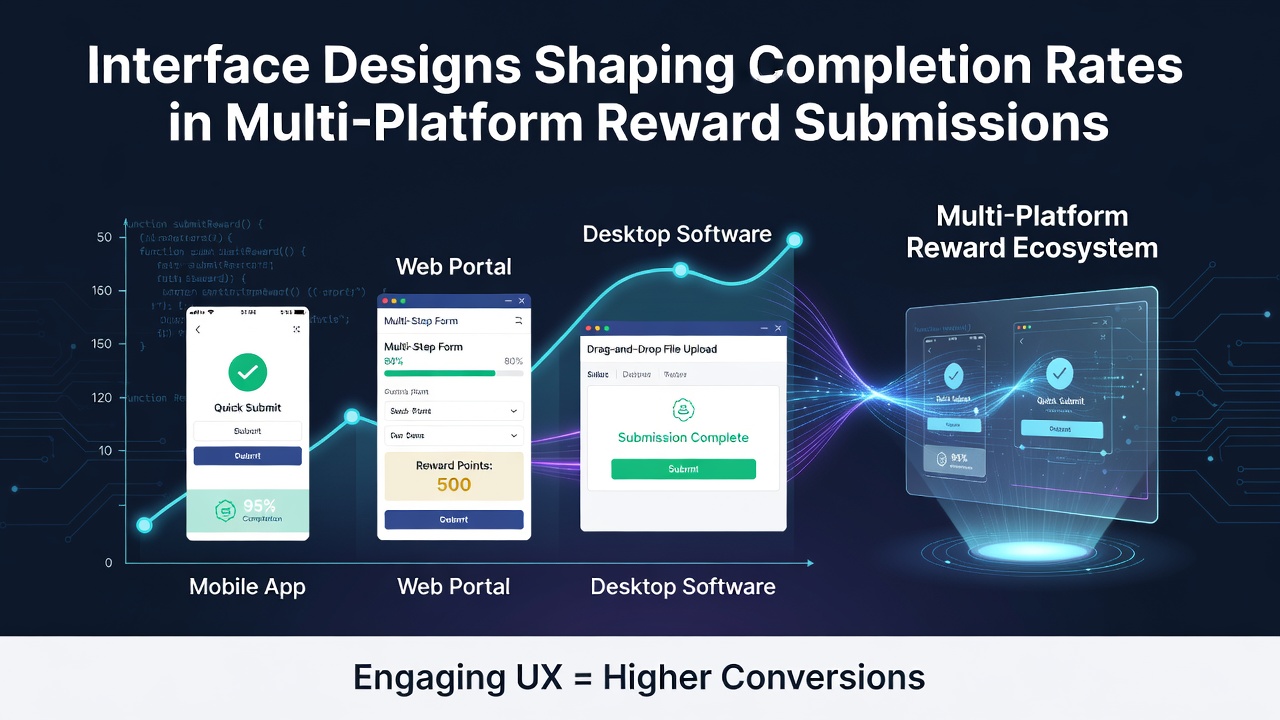
Interface designs play a central role in determining how users complete reward submissions when they move between mobile applications, web portals, and desktop platforms, and data from multiple studies show measurable differences in completion rates based on specific design choices. Researchers have tracked these patterns across various reward systems where participants submit information for verification and allocation, noting that elements such as form length, button placement, and visual hierarchy directly correlate with the percentage of started submissions that reach final confirmation.
Form Layout and Input Field Arrangement
Studies indicate that reward submission forms with grouped input fields and progressive disclosure techniques achieve higher completion percentages than those presenting all fields at once, because users encounter fewer cognitive interruptions when information appears in logical sequences. Observers note that platforms incorporating inline validation messages reduce abandonment during the entry of personal details or account identifiers, while those without such feedback see users exit mid-process at rates that can exceed 30 percent according to aggregated analytics reports. In July 2026 several multi-platform providers updated their field arrangements following internal testing that highlighted the impact of spacing and label alignment on submission success.
Navigation Consistency Across Devices
Cross-device navigation consistency influences completion rates when users switch from smartphone apps to tablet or desktop interfaces during a single reward claim process, and evidence shows that mismatched menu structures or button labels create friction that lowers overall success. Data indicates platforms maintaining uniform iconography and progress indicators across operating systems record steadier progression through submission stages, whereas fragmented designs lead to repeated logins or form restarts. Those who have examined transaction logs from reward programs report that seamless session handoffs between devices correlate with completion improvements ranging from 12 to 18 percent in controlled comparisons.
Button Placement and Visual Prominence
Button size, color contrast, and positioning affect the final steps of reward submissions, particularly on smaller screens where touch targets compete with other interface elements. Research indicates that primary action buttons placed within the natural thumb zone on mobile layouts increase confirmation clicks, while secondary options for saving progress or reviewing terms remain accessible yet less dominant. Figures from industry analyses reveal that platforms adjusting button hierarchy after A/B tests observe measurable lifts in completion, especially when color schemes align with accessibility standards that accommodate varied lighting conditions and user preferences.
Progress Indicators and Feedback Mechanisms
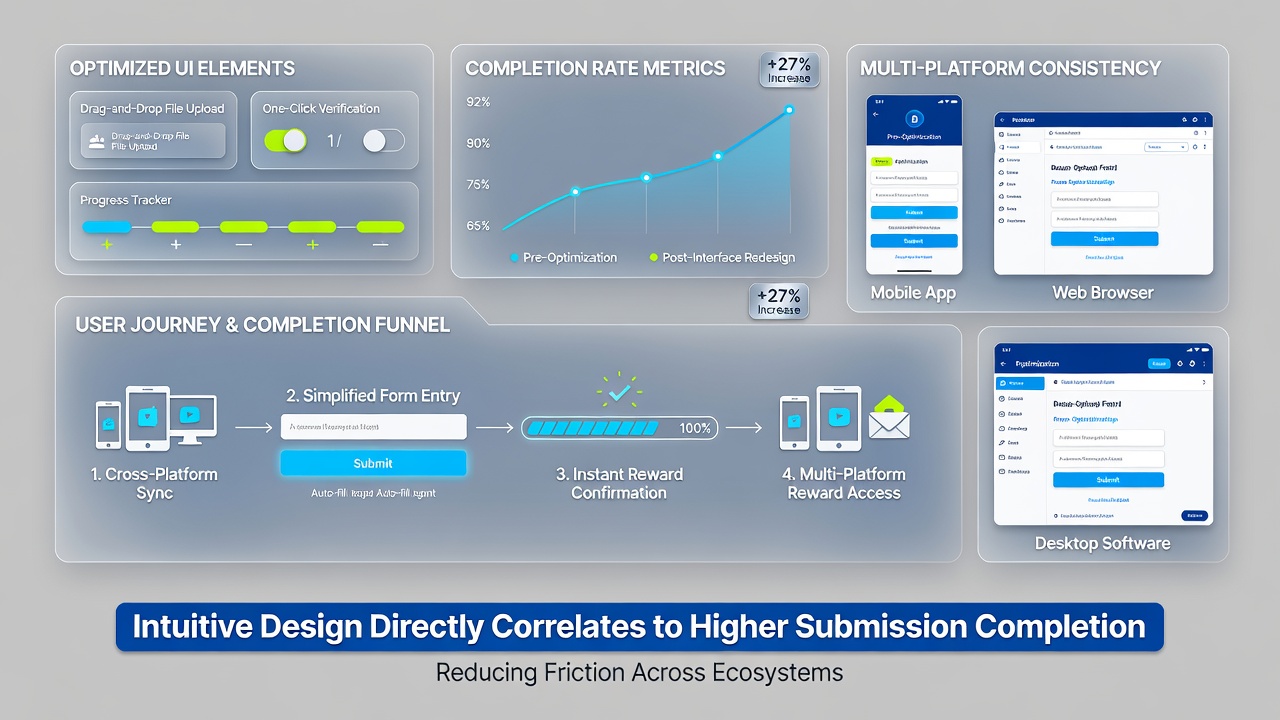
Progress bars and step counters provide users with clear expectations about remaining actions in multi-stage reward submissions, and findings demonstrate that visible indicators reduce drop-off between initial form entry and final review. Platforms incorporating real-time status updates after each section submission maintain user engagement through longer processes, while those relying on static pages experience higher exit rates during verification waits. According to a report issued by the Federal Trade Commission on digital consumer interfaces, clear feedback loops support higher task completion in systems that require cross-platform data synchronization.
Accessibility Features and Inclusive Design
Accessibility elements such as screen reader compatibility, adjustable text sizes, and keyboard navigation support broader user participation in reward submissions, and statistics show that compliant designs expand completion rates among diverse populations. Observers have documented that interfaces following established guidelines from international standards bodies record fewer errors during data entry for users relying on assistive technologies. In regions monitored by the European Commission digital accessibility directives, platforms updated in 2025 and 2026 demonstrated improved submission continuity when contrast ratios and focus indicators met updated thresholds.
Data Synchronization and Platform Transitions
Seamless data synchronization between platforms allows users to begin a reward submission on one device and finish on another without re-entering information, and completion data confirms that robust backend connections minimize interruptions. Systems employing secure token-based handoffs between applications and websites maintain higher progression rates than those requiring repeated authentication. Analysts reviewing logs from global reward programs note that synchronization failures often coincide with sharp declines in final submissions, prompting providers to prioritize API reliability in design updates.
Conclusion
Interface design choices continue to shape completion rates in multi-platform reward submissions through measurable effects on user flow, error reduction, and cross-device continuity. Evidence from ongoing platform analyses and regulatory reviews points to specific elements like form sequencing, button hierarchy, and synchronization features as consistent predictors of successful outcomes. As providers refine these aspects in response to performance metrics, patterns in completion data offer guidance for future iterations across reward ecosystems.