How Device Battery Levels Shape Last-Minute Submission Trends in Global Reward Platforms
Written by Ellis Albrecht · Jun 13, 2026
How Device Battery Levels Shape Last-Minute Submission Trends in Global Reward Platforms
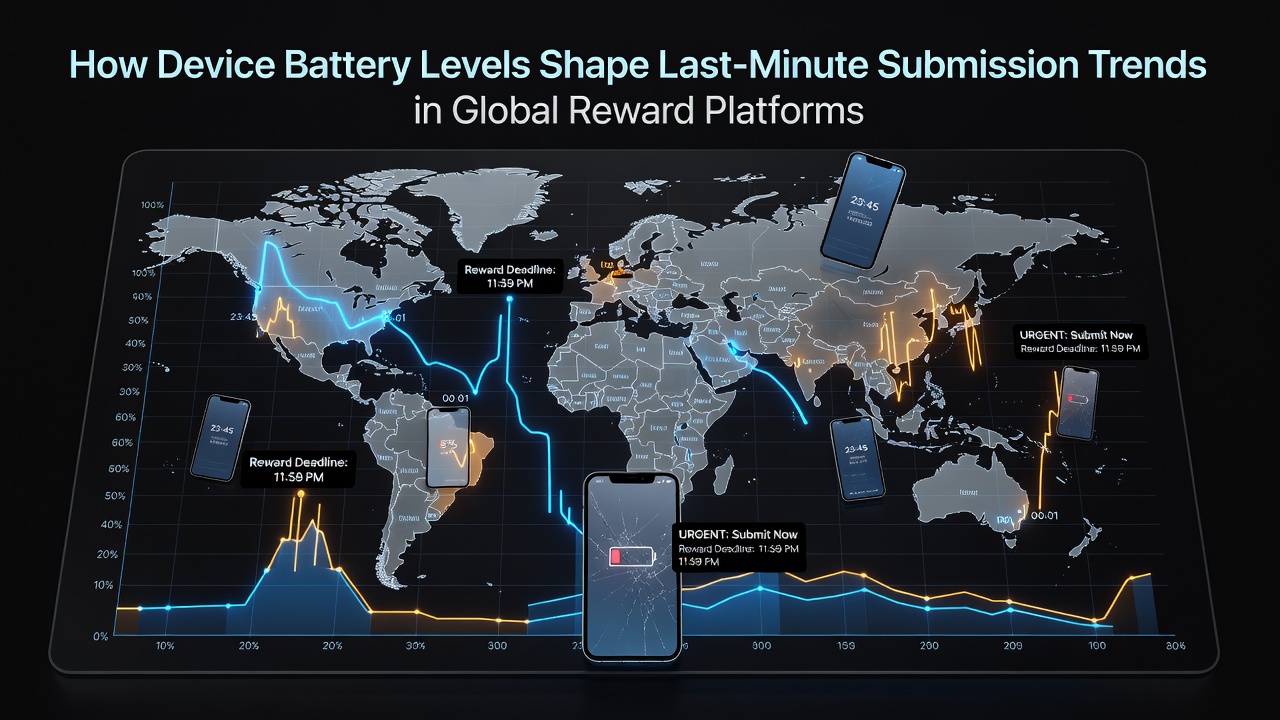
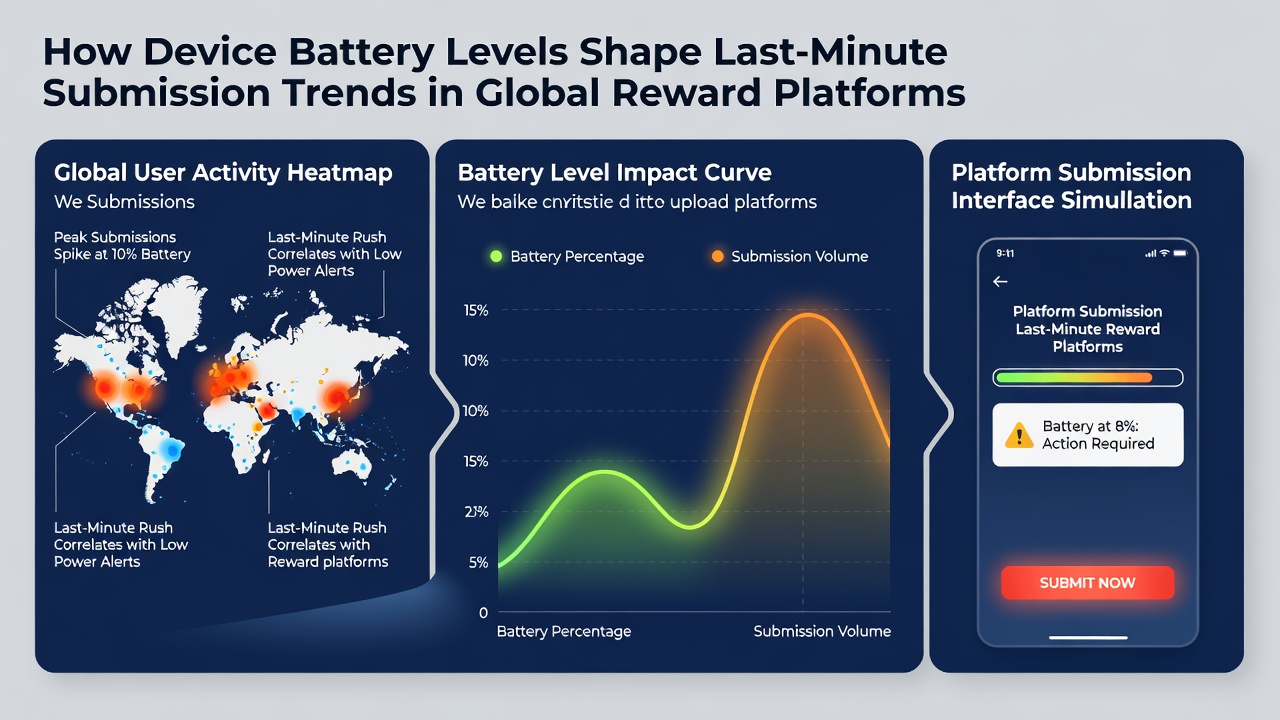
Device battery levels create measurable shifts in when users complete their entries on global reward platforms, and data collected across multiple systems points to consistent patterns where lower power reserves coincide with clustered submissions near deadlines. Researchers tracking these interactions have noted that alerts warning of imminent shutdown often trigger immediate activity as participants rush to finalize forms before devices lose functionality, while platforms record higher volumes of activity in the final hours of promotional windows when battery indicators dip below 20 percent.
Observed Patterns in Submission Timing
Analytics from reward platforms operating across continents show that entries submitted when battery status falls into the critical range tend to arrive within tighter timeframes compared to those logged on devices holding steady above half capacity, and this correlation holds across different prize categories and entry methods. Studies examining mobile user behavior indicate that low-battery notifications function as external cues that compress decision-making windows, prompting users to prioritize reward platform tasks over other applications running in the background. In June 2026 platform reports highlighted spikes in activity during evening hours when many devices naturally reach lower charge states after daytime use, revealing how routine charging cycles intersect with promotional cutoffs to influence participation rhythms.
Technical Factors Driving the Connection
Operating systems on smartphones and tablets manage power allocation in ways that affect app responsiveness, and when reserves drop users often experience throttled background processes that delay form submissions until the final moments before deadlines pass. Reward platforms have implemented adaptive loading features that detect device conditions, yet these adjustments sometimes amplify last-minute rushes because slower connections compound the urgency felt by participants monitoring their battery icons. Data synchronization across global servers further complicates matters, since entries queued during low-power states may experience variable latency depending on regional network loads and the specific reward pools involved.
Those who study mobile engagement metrics have documented how push notification timing interacts with battery warnings, creating compound effects where users receive contest reminders at the same time their devices signal power concerns, and this overlap drives concentrated submission activity in narrow intervals. Engineers designing these systems note that battery-aware optimizations, while intended to extend device life, inadvertently steer users toward deadline-adjacent behavior rather than steady participation throughout promotional periods.
Regional Data and Platform Variations
Comparisons across markets reveal differences in how battery-related submission trends manifest, with higher densities of last-minute entries appearing in regions where mobile data plans tie closely to device usage patterns and where charging infrastructure remains less consistent. According to a Statistics Canada analysis of digital participation, Canadian users demonstrate similar clustering when battery levels fall, particularly in rural areas where access to power sources varies. European Commission reports on digital engagement further detail how cross-border reward platforms observe comparable shifts, though the exact timing windows differ based on local electricity reliability and typical device charging habits.
Platforms serving multiple continents adjust their backend processes to accommodate these fluctuations, implementing queue management that smooths load during periods when low-battery submissions peak, yet the underlying behavioral driver remains tied to individual device status rather than promotional design alone. Observers tracking these systems point to June 2026 figures showing elevated activity in Asia-Pacific markets during late afternoon local times, coinciding with widespread battery depletion after extended mobile sessions.
Implications for Platform Design and User Experience
Developers working on reward platforms increasingly incorporate battery status detection into their analytics frameworks, allowing them to predict submission surges and allocate server resources accordingly without altering core eligibility rules or prize structures. This approach stems from aggregated data showing that users rarely adjust their entry habits proactively, instead responding to immediate device prompts that compress activity into shorter windows near closing times. Research institutions examining human-computer interaction have published findings on how power indicators serve as de facto timers, influencing not just when entries occur but also how thoroughly participants review terms before submission.
Global reward systems continue to evolve their interfaces to provide clearer remaining-time indicators alongside battery readouts, helping mitigate the rushed submissions that occur when both metrics approach critical thresholds simultaneously. Those analyzing long-term trends note that these patterns persist across different device manufacturers and operating system versions, suggesting the influence operates at a fundamental level of user-device interaction rather than through platform-specific mechanics.
Conclusion
Battery levels on participant devices exert a documented influence on submission timing within global reward platforms, producing predictable concentrations of activity as power reserves decline and deadline pressure mounts. Platform operators and researchers continue to examine these dynamics through detailed usage logs and regional comparisons, revealing connections between everyday device management and broader participation trends that shape how entries reach reward systems worldwide. Data from multiple sources, including government statistical agencies and academic studies, supports ongoing refinements in how platforms handle these temporal clusters while maintaining equitable access for users regardless of their device conditions at any given moment.