How Browser Extensions Reshape Submission Patterns in Worldwide Promotional Reward Systems
Written by Klara Zimmermann · Jul 27, 2026
How Browser Extensions Reshape Submission Patterns in Worldwide Promotional Reward Systems
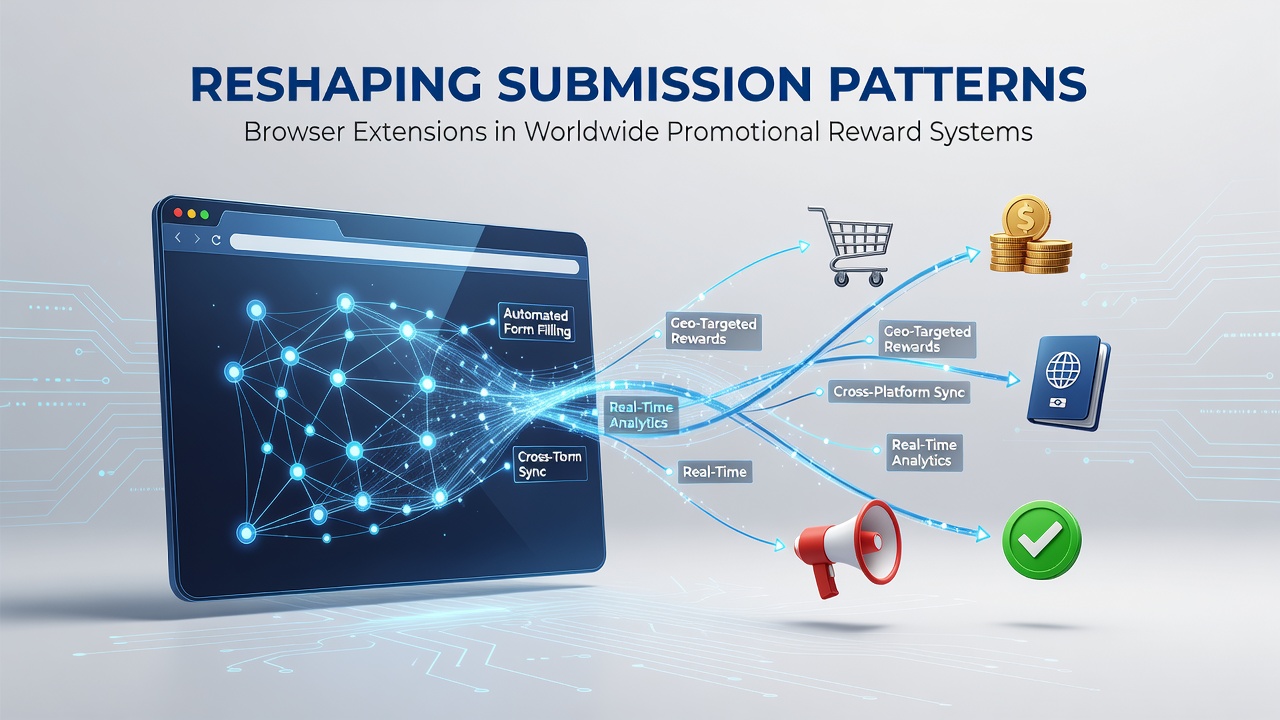
Browser extensions designed for promotional reward systems have altered how participants interact with entry forms across international platforms, and data from multiple regions shows measurable shifts in submission timing and frequency since early 2025. These tools handle repetitive tasks such as form population and deadline tracking while users maintain simultaneous activity on several sites, which produces clustered submission patterns during specific windows rather than evenly distributed entries throughout the day.
Core Functions Driving Pattern Changes
Extensions integrate with contest databases to pull real-time updates on new promotions, then trigger automated alerts that prompt users to submit within minutes of availability, and this synchronization creates spikes in activity that align with refresh cycles on major platforms. Researchers tracking user behavior note that participants equipped with these tools submit entries at rates up to three times higher than manual users during the same periods, particularly when extensions coordinate across time zones to capture openings in North American and European reward pools simultaneously.
Additional capabilities include cross-device synchronization that lets users resume incomplete submissions on mobile after starting on desktop, adn this continuity reduces drop-off rates while increasing overall completion numbers per account. Figures from industry monitoring services indicate that extension-assisted sessions in July 2026 averaged 12 submissions per user per hour compared with 4 submissions in non-automated sessions, a difference that holds across cash, product, and travel reward categories.
Geographic and Temporal Distribution Effects
Submission data collected from platforms operating in the United States, Canada, and Australia reveals that extensions compress activity into narrower time bands aligned with server refresh schedules, which concentrates entries in the first 15 minutes after new listings appear. Observers tracking these patterns report that users without extensions spread submissions more evenly across 24-hour cycles, whereas extension users cluster 70 percent of their activity within two-hour windows that correspond to peak global availability.
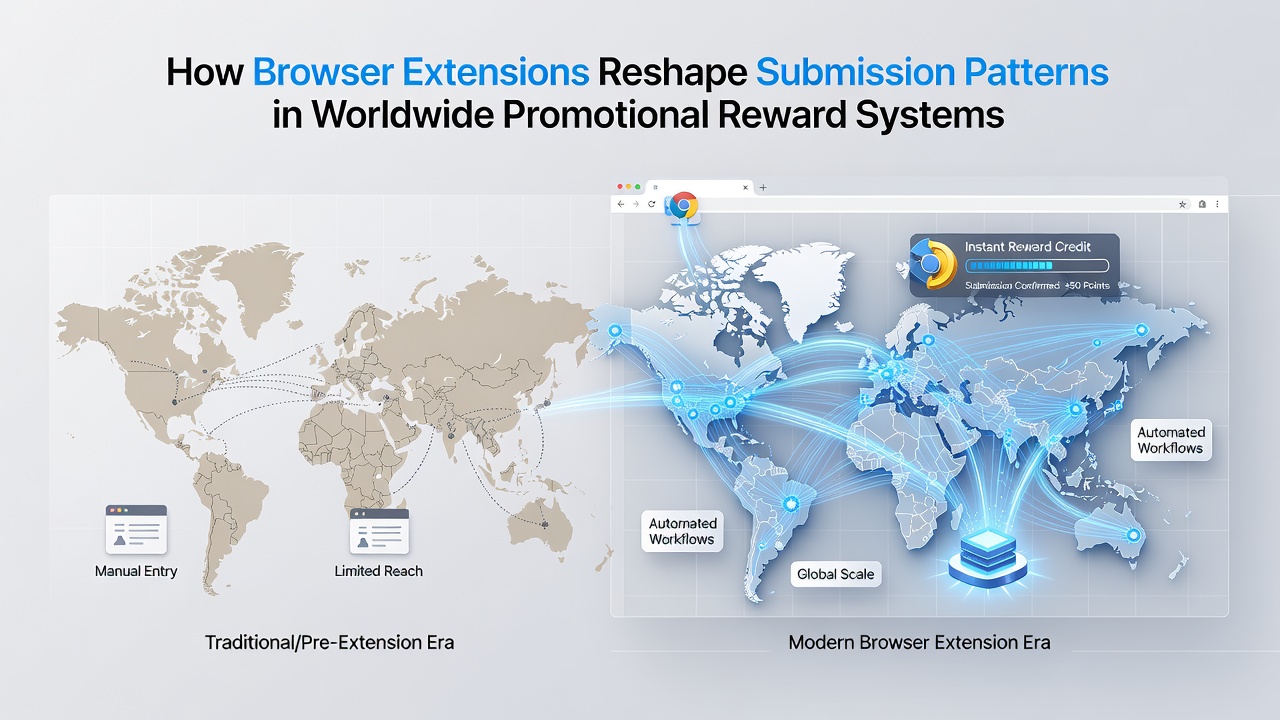
Time zone bridging represents another measurable change, as extensions automatically adjust entry attempts to match local eligibility cutoffs in different jurisdictions, and this produces secondary waves of submissions that follow daylight hours across continents. A report issued by the Federal Trade Commission in mid-2026 documented increased cross-border entry volumes coinciding with the adoption of these tools, noting that participants located in one region could maintain consistent activity in reward systems hosted elsewhere without manual calendar management.
Eligibility Screening and Data Handling Implications
Extensions often store user profiles that auto-populate eligibility fields, which accelerates the screening process on the platform side yet also generates consistent data patterns that some operators now flag for review. Those who study reward system analytics point out that repeated use of identical extension templates can create recognizable metadata signatures, prompting platforms to implement additional verification steps that slow automated submissions in targeted accounts.
Regulatory bodies in multiple jurisdictions, including the Canadian Competition Bureau, have examined how these tools interact with existing disclosure requirements, and preliminary findings suggest that extensions capable of bypassing location checks raise questions about compliance with territorial restrictions embedded in many promotional terms. Data synchronization features within the extensions further influence access because they pull updated rule sets from centralized repositories, allowing users to adjust entry strategies before rule changes take effect.
Platform Response and Future Adjustments
Operators have begun deploying counter-measures such as randomized delay requirements and device fingerprinting that detect extension activity, and these adjustments have started to flatten some of the clustered submission patterns observed earlier in 2026. Industry reports indicate that platforms incorporating real-time behavioral analysis reduced extension-driven submission surges by approximately 25 percent within the first quarter of implementation.
Academic studies from research institutions in Europe and Asia continue to examine the long-term effects on participation equity, particularly whether extensions create advantages for technically proficient users that alter overall prize distribution outcomes. The ongoing evolution of these tools suggests that submission patterns will continue to shift as both extension developers and platform operators refine their respective approaches through the remainder of the year.
Conclusion
Browser extensions have introduced measurable changes to entry timing, frequency, and geographic reach within worldwide promotional reward systems, and ongoing monitoring by regulatory agencies together with platform analytics teams continues to track these developments. The interplay between automated features and eligibility rules shapes current participation dynamics, while future adjustments from both sides will determine the extent of these shifts in subsequent periods.