Exploring Data Synchronization Methods That Influence Access to Worldwide Promotional Reward Pools
Written by Ellis Albrecht · May 30, 2026
Exploring Data Synchronization Methods That Influence Access to Worldwide Promotional Reward Pools
Data synchronization methods determine how participant information flows between regional servers and central reward databases, and these processes directly shape eligibility checks as well as prize distribution across borders. Observers note that companies running multi-country promotions rely on coordinated data streams to verify entries in real time while respecting varying legal frameworks, and the choice of synchronization approach often decides whether users in one region can even see available reward pools.
Core Synchronization Techniques in Promotional Systems
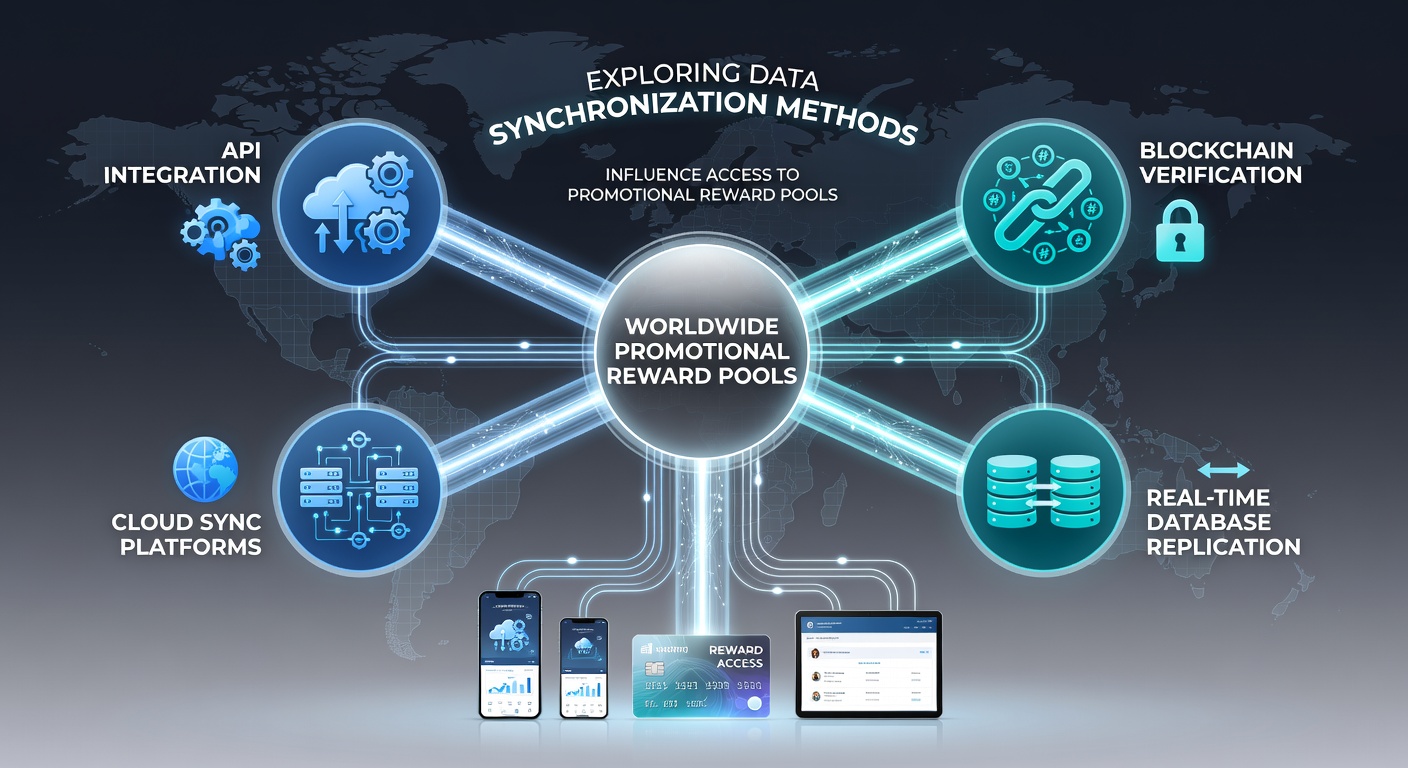
Real-time application programming interface calls allow instant updates when a participant submits an entry, which means location data and account details reach the central pool within milliseconds and reduce the risk of duplicate claims. Batch processing, by contrast, collects entries over set intervals before pushing them to the master database, and this method suits high-volume events where immediate confirmation is less critical than overall system stability. Researchers have documented that hybrid models combining both approaches have become common in large-scale campaigns because they balance speed with resource efficiency during peak submission periods.
Cloud-based replication services further influence access by maintaining mirrored datasets across multiple geographic zones, and these services automatically route queries to the nearest available node so users experience consistent response times regardless of their location. Data indicates that when synchronization lags occur due to network congestion or server maintenance, certain regions temporarily lose visibility into active reward pools until the next replication cycle completes.
Geographic and Temporal Coordination Challenges
Time zone differences require careful handling during synchronization because a promotion ending at midnight in one jurisdiction may still be active elsewhere, and mismatched clocks can lead to premature closure of entry windows for participants in distant time zones. Systems often convert all timestamps to coordinated universal time before storing them, yet conversion errors still surface when daylight saving changes are not properly accounted for in the synchronization logic. Those who manage international campaigns report that automated scripts now flag such discrepancies before they affect user access.
Location verification adds another layer because many reward pools restrict participation based on country or state residency, and synchronization methods must pull fresh geolocation data rather than relying on cached information that could be hours or days old. When a user travels across borders mid-campaign, delayed synchronization can either grant or deny access incorrectly until the next data refresh occurs.
Regulatory Frameworks Shaping Data Flows
Cross-border data transfer rules affect which synchronization methods operators can legally employ, and regulations in different regions impose distinct requirements for consent, encryption, and data residency. According to guidance from the European Commission, personal data involved in promotional activities must meet strict adequacy standards before leaving the European Economic Area, which pushes many operators toward regional data centers with localized synchronization rather than fully centralized global databases.
Canadian authorities through the Office of the Privacy Commissioner have similarly emphasized that synchronization processes handling participant information must incorporate privacy-by-design principles, and this has led some platforms to adopt edge computing solutions that process and store data closer to the source before selective replication occurs. In Australia, the Office of the Australian Information Commissioner oversees comparable requirements that influence how frequently reward pool data can be synced across jurisdictions without triggering additional compliance reviews.
Emerging Technologies and Their Effects
Blockchain ledgers have started appearing in synchronization architectures for promotional systems because they create immutable records of each entry submission and verification step, and this transparency helps resolve disputes when multiple users claim the same reward slot. Distributed ledger updates propagate through peer-to-peer networks rather than traditional client-server models, which changes both the speed and the cost profile of maintaining consistent reward pool states worldwide. Studies from academic institutions tracking these implementations show measurable reductions in post-campaign reconciliation time when blockchain elements are included.
Artificial intelligence models now predict synchronization load patterns based on historical entry data and upcoming promotional calendars, and these predictions allow systems to pre-allocate bandwidth or spin up additional nodes ahead of expected surges. In May 2026, several major platforms announced expanded use of such predictive tools to handle simultaneous global campaigns without the access interruptions that previously occurred during high-traffic windows.
Conclusion
Data synchronization methods continue to evolve as operators balance technical performance, regulatory compliance, and user experience across increasingly complex international promotion landscapes. The interplay between real-time and batch processes, geographic timing adjustments, privacy regulations, and emerging technologies determines which participants can reach worldwide reward pools at any given moment. As platforms refine these systems, access patterns shift in measurable ways that reflect both technological capabilities and legal boundaries in different regions.