Cross-Cultural Timing Quirks That Shift Entry Volumes in Region-Specific Promotional Drawings
Written by Kai Krause · Jul 9, 2026
Cross-Cultural Timing Quirks That Shift Entry Volumes in Region-Specific Promotional Drawings
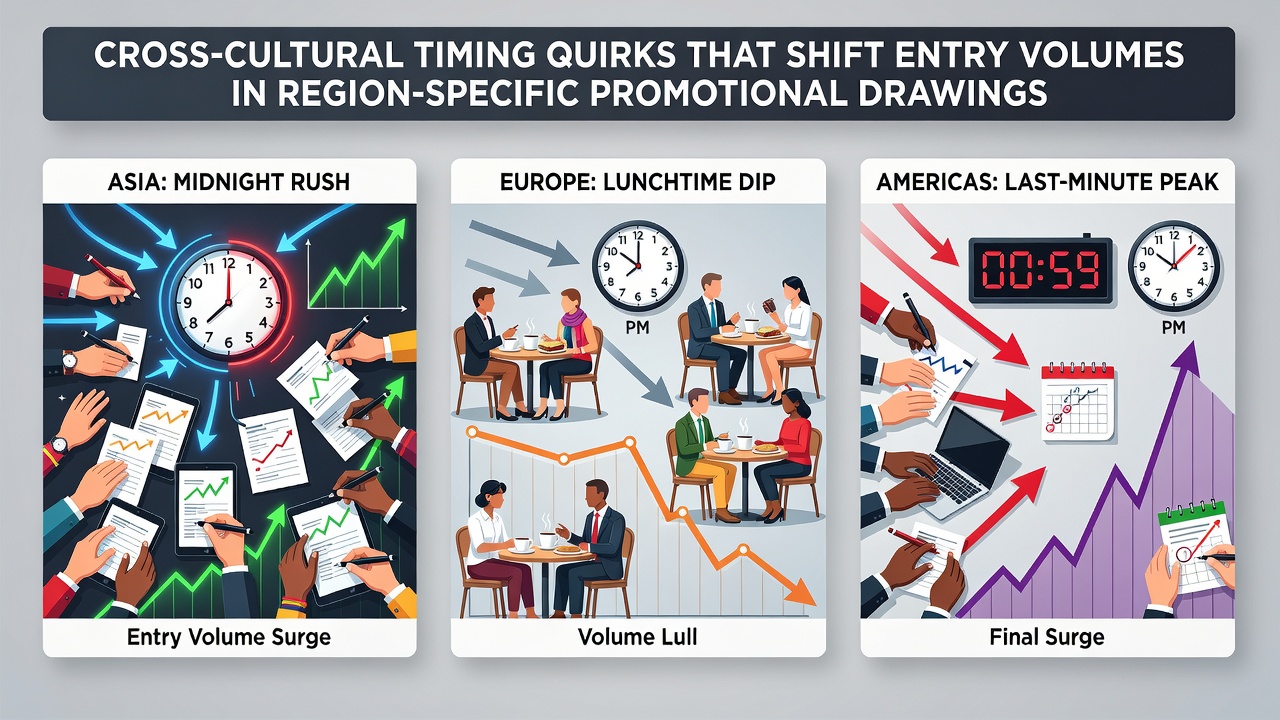
Promotional drawings operate within distinct regional frameworks where local customs and daily schedules determine when participants submit entries, and data from multiple markets shows clear patterns tied to these factors. Observers note that entry volumes rise or fall based on how cultural groups structure their days, with peaks often aligning to specific hours that reflect work breaks, family obligations, or communal activities rather than universal clock times.
Daily Rhythms and Submission Patterns
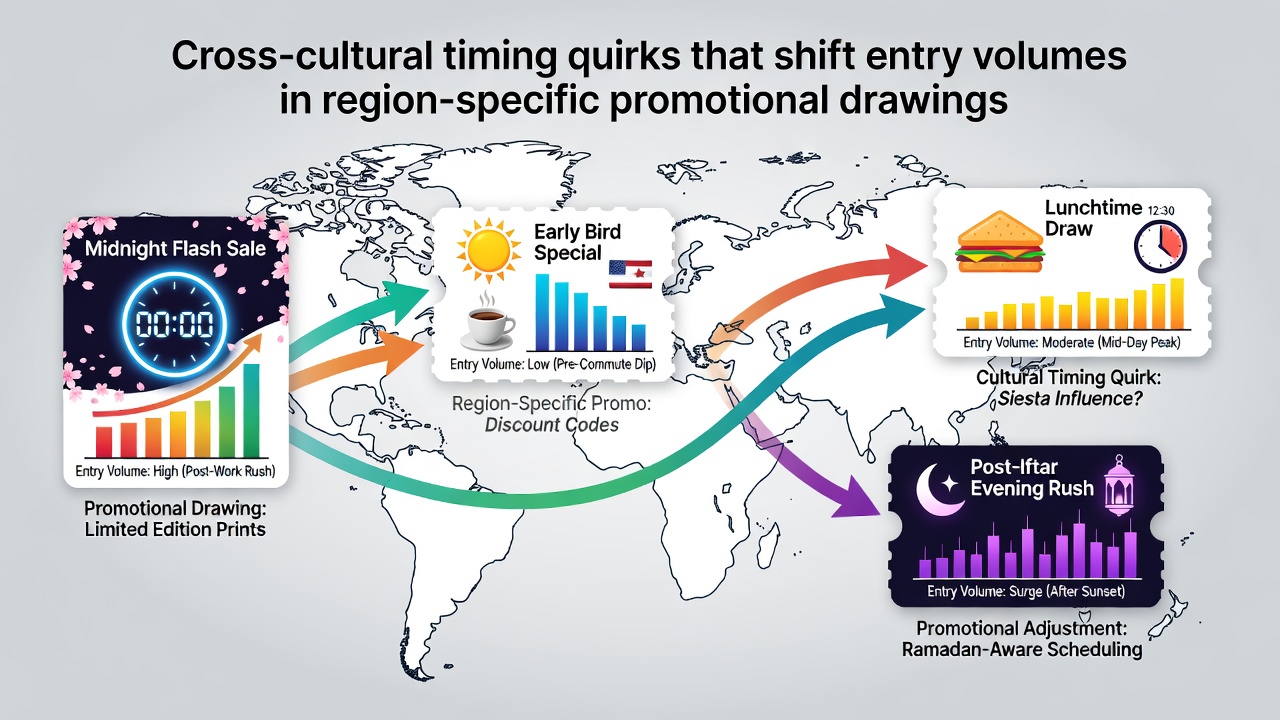
Research indicates that in many Latin American countries afternoon siestas reduce midday activity on mobile devices, which in turn lowers entry rates during those windows, whereas evening hours after family meals see sustained increases. European markets show different clusters, with northern regions recording higher volumes during early evening commutes compared to southern areas where later dinners shift activity forward by several hours. Studies from consumer behavior analysts reveal that these variations persist across similar time zones because cultural pacing overrides simple geographic alignment.
Asian markets add another layer where lunch periods extend longer in some countries, creating brief lulls followed by sharp rebounds once offices resume operations. Data collected during 2025 campaigns demonstrated that platforms adjusting notification schedules to match these local breaks achieved more consistent entry flows than those using standardized global pushes.
Holiday and Festival Influences on Volume Spikes
Festivals create pronounced shifts in several regions, with pre-celebration days often producing elevated entries as people plan leisure time around promotional deadlines. In India, the approach of Diwali typically generates morning surges tied to shopping preparations, while Middle Eastern markets during Ramadan show increased late-night activity after iftar gatherings. One analysis of multi-country promotions found that entry numbers in affected zones climbed between 30 and 45 percent on days immediately preceding major observances compared to baseline weeks.
July 2026 data from ongoing regional campaigns highlighted similar effects around Bastille Day preparations in France and Obon observances in Japan, where timing adjustments helped organizers capture higher participation before traditional slowdowns set in. These events illustrate how advance knowledge of cultural calendars allows promoters to time announcements for maximum reach.
Work Culture and Technology Access Points
Workplace norms further shape submission trends, with countries maintaining shorter standard workweeks recording steadier weekend entries while others concentrate activity during weekday evenings. Mobile penetration rates interact with these patterns, as regions with high smartphone usage during transit times show different peaks than those where desktop access dominates office hours. Reports from the Federal Trade Commission note that compliance monitoring across borders benefits from recognizing these access variations to ensure fair distribution of promotional opportunities.
Platform algorithms that incorporate regional usage data have demonstrated improved performance in matching entry windows to local habits. Australian market studies, for instance, link higher afternoon volumes to school pickup routines in suburban areas, a factor less prominent in dense urban centers elsewhere.
Platform Adaptations and Regional Testing
Promoters increasingly rely on segmented testing to identify optimal entry periods rather than applying blanket schedules. Evidence from multi-region trials shows that staggered release times aligned with cultural meal breaks or commute patterns sustain higher overall volumes than single global launches. Industry reports compiled by the Australian Competition and Consumer Commission emphasize the value of such localized approaches in maintaining engagement across diverse regulatory environments.
Cross-border operators who track these nuances report more balanced participation rates, particularly when campaigns span multiple continents with overlapping but culturally distinct time preferences. The patterns emerge consistently enough that predictive models now factor in festival calendars and average daily activity curves by country.
Conclusion
Regional timing differences continue to influence entry volumes in promotional drawings through established cultural and practical rhythms. Organizations that map these factors into campaign planning achieve steadier participation across markets, as demonstrated by performance metrics collected over successive years. Ongoing data collection in 2026 reinforces the need for flexible scheduling that respects local daily structures while meeting regulatory standards in each jurisdiction.