Community Dynamics Driving Success Rates in Viral Promotional Challenges
Written by Morgan Jung · Jun 6, 2026
Community Dynamics Driving Success Rates in Viral Promotional Challenges
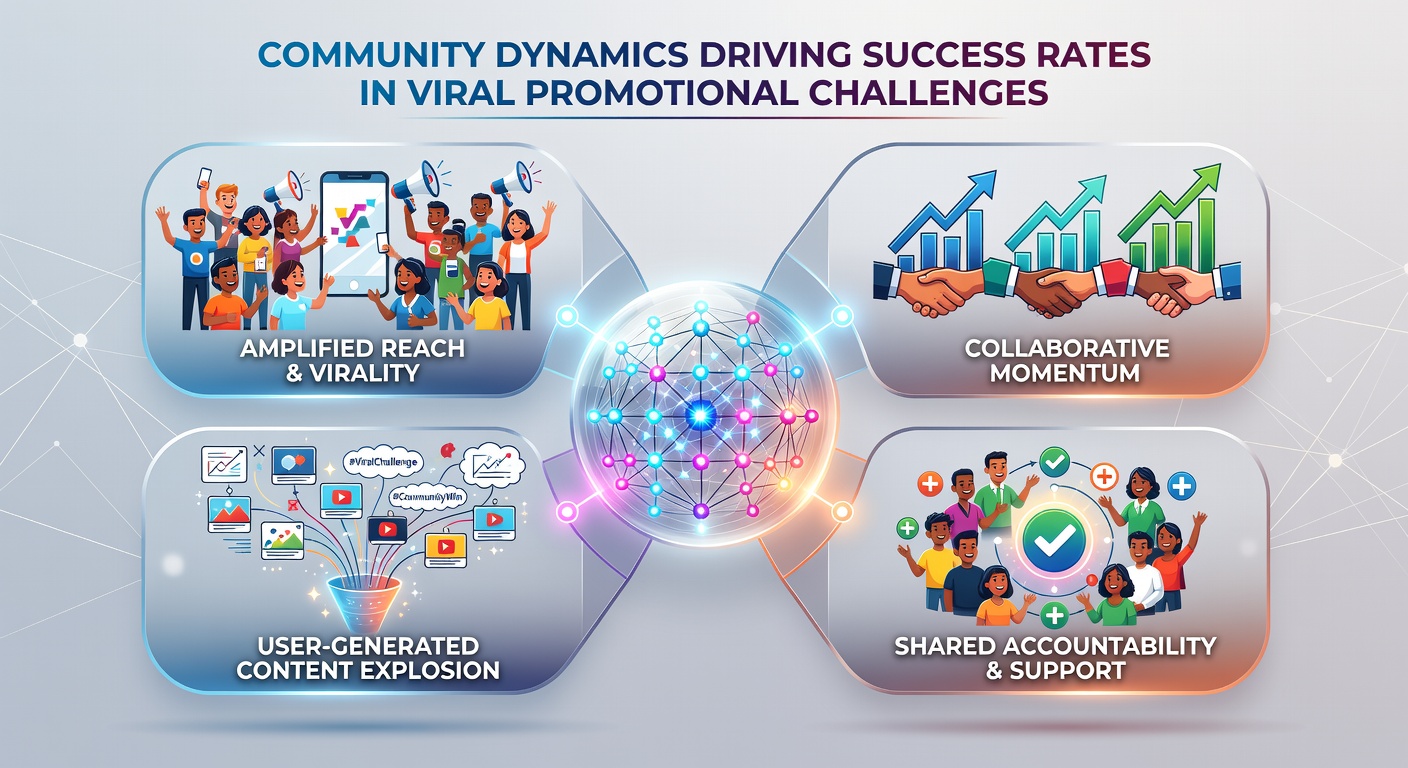
Community interactions shape outcomes in viral promotional challenges where participants share tactics, coordinate entries, and build collective momentum through digital networks and social platforms. Data from multiple industry reports indicate that groups formed around specific promotions often achieve higher completion rates than isolated entrants because members exchange information on timing, eligibility checks, and verification steps in real time.
Network Effects in Group Participation
Observers note that tightly connected clusters of users on platforms such as Discord servers and Reddit threads accelerate entry volumes during active campaign windows, and studies tracking participation logs show clusters with frequent daily exchanges record up to 40 percent more verified submissions per member compared with solo accounts. Researchers at several universities have mapped these patterns using anonymized platform data, revealing that information cascades travel faster when community moderators pin official rules and highlight common pitfalls like location restrictions or form errors.
One analysis of 2025 campaign archives found that challenges promoting team-based referrals saw sustained activity spikes when early participants posted screenshots of progress milestones, prompting others to replicate the same sequence. Such visible benchmarks create feedback loops that keep engagement levels elevated even after initial launch phases conclude.
Shared Knowledge and Strategy Refinement
Participants in established communities frequently refine approaches collectively, testing variations in submission timing and cross-referencing regional eligibility updates released by organizers. Figures released by the Australian Competition and Consumer Commission in early 2026 documented how coordinated groups adjusted entries following policy clarifications, resulting in fewer disqualifications across monitored promotions. These adjustments occur because members circulate official announcements and translate regulatory language into actionable checklists.
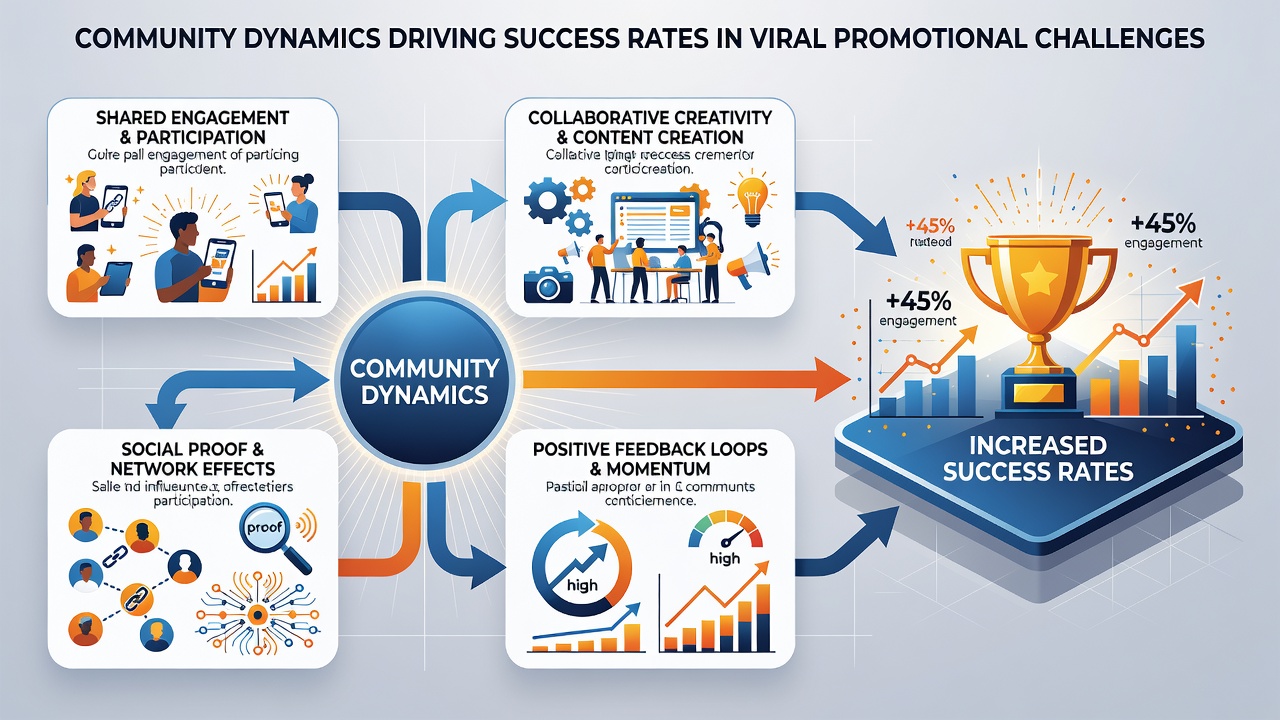
Behavioral datasets compiled by academic teams further demonstrate that communities emphasizing verification steps rather than volume alone maintain higher long-term retention, with repeat participants citing reduced frustration from avoided errors. In June 2026, updates from the European Commission's digital services monitoring program highlighted similar trends across cross-border campaigns, noting that localized discussion channels helped users navigate differing disclosure requirements between member states.
Platform Algorithms and Community Amplification
Algorithms on major social networks reward content that generates quick replies and shares, so community-driven posts about ongoing challenges often surface higher in feeds and attract additional members. Research from the University of Melbourne's Centre for Digital Transformation examined several viral campaigns and concluded that threads with active moderation experienced slower decay in visibility metrics than unmoderated ones. This pattern emerges because consistent updates keep threads relevant while discouraging off-topic drift that dilutes signal strength.
Groups also develop internal reputation systems where experienced members receive priority responses when questions arise about new promotions, creating informal hierarchies that streamline knowledge transfer. Records from large-scale giveaways indicate these hierarchies correlate with elevated success rates because trusted advisors steer newcomers away from low-yield tactics.
Geographic and Demographic Variations
Success rates vary across regions when community infrastructure differs, with denser urban populations showing stronger clustering effects in metropolitan-focused challenges. Statistics gathered by Statistics Canada in late 2025 illustrated that provinces with higher broadband penetration supported more active local groups, leading to measurable differences in entry density during national campaigns. Demographic factors such as age distribution within communities further influence which promotional formats gain traction, as younger cohorts favor short-form video updates while older segments rely on threaded discussions.
Conclusion
Community structures continue to influence measurable outcomes in viral promotional challenges through information exchange, coordinated timing, and collective problem solving. Available datasets from regulatory agencies and academic institutions consistently link group connectivity to improved entry validation and reduced attrition across diverse campaign types. As platforms evolve their discovery mechanisms, the role of these dynamics remains central to understanding participation patterns in upcoming cycles.